Overview
Several weeks ago was the ARRL June VHF competition. I had recently gotten a Yaesu TS-450D, which meant I finaly had a rig that does 6m. I spent a few weeks planning and decided to build a halo antenna for 6m and operate from Murphy Dome (SOTA ref: KLF/FN-152).
The halo antenna was chosen for its compactness, because I wanted to be able to raise the whole antenna with just the one telescoping fiberglass pole I own.
Murphy Dome was chosen because it is relatively high, and located in Maidenhead gridsquare BP54, whereas most of the hams in this area are in BP64. I also considered operating at Ester Dome, but many of the cell and broadcast towers serving Fairbanks are up there. I decided the ambient rf environment there would be bad for operating, and possibly for health.
Antenna construction
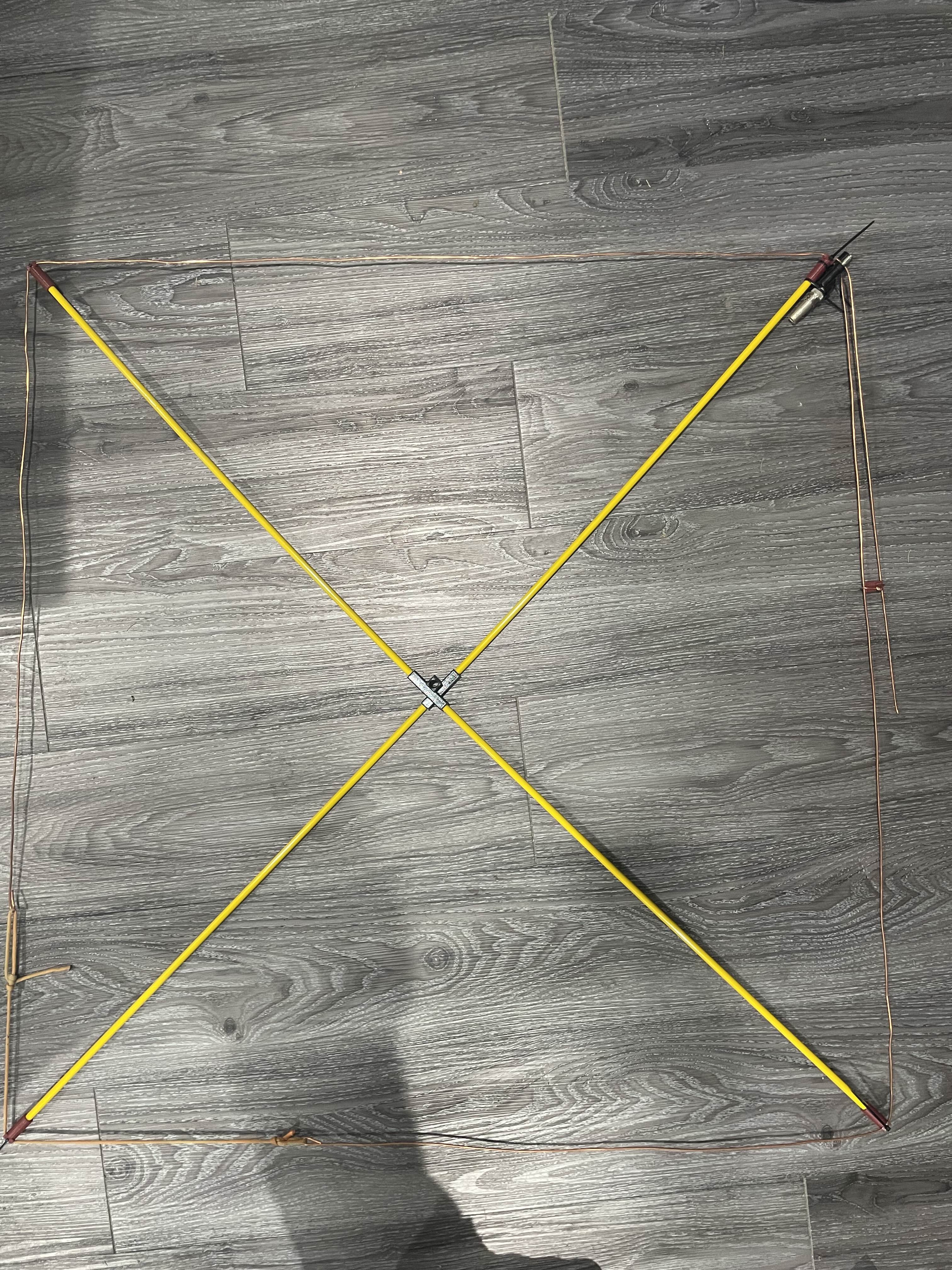
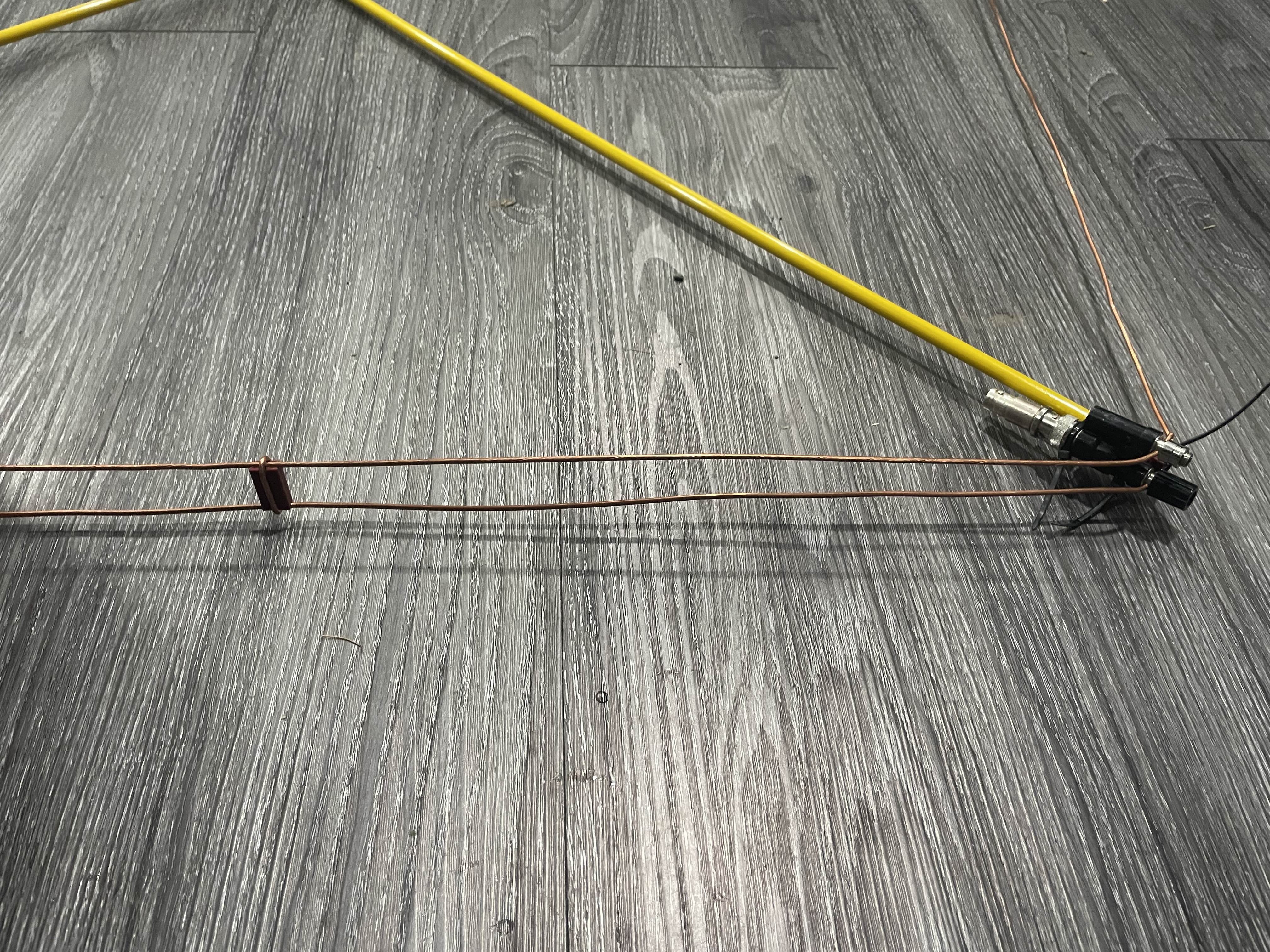
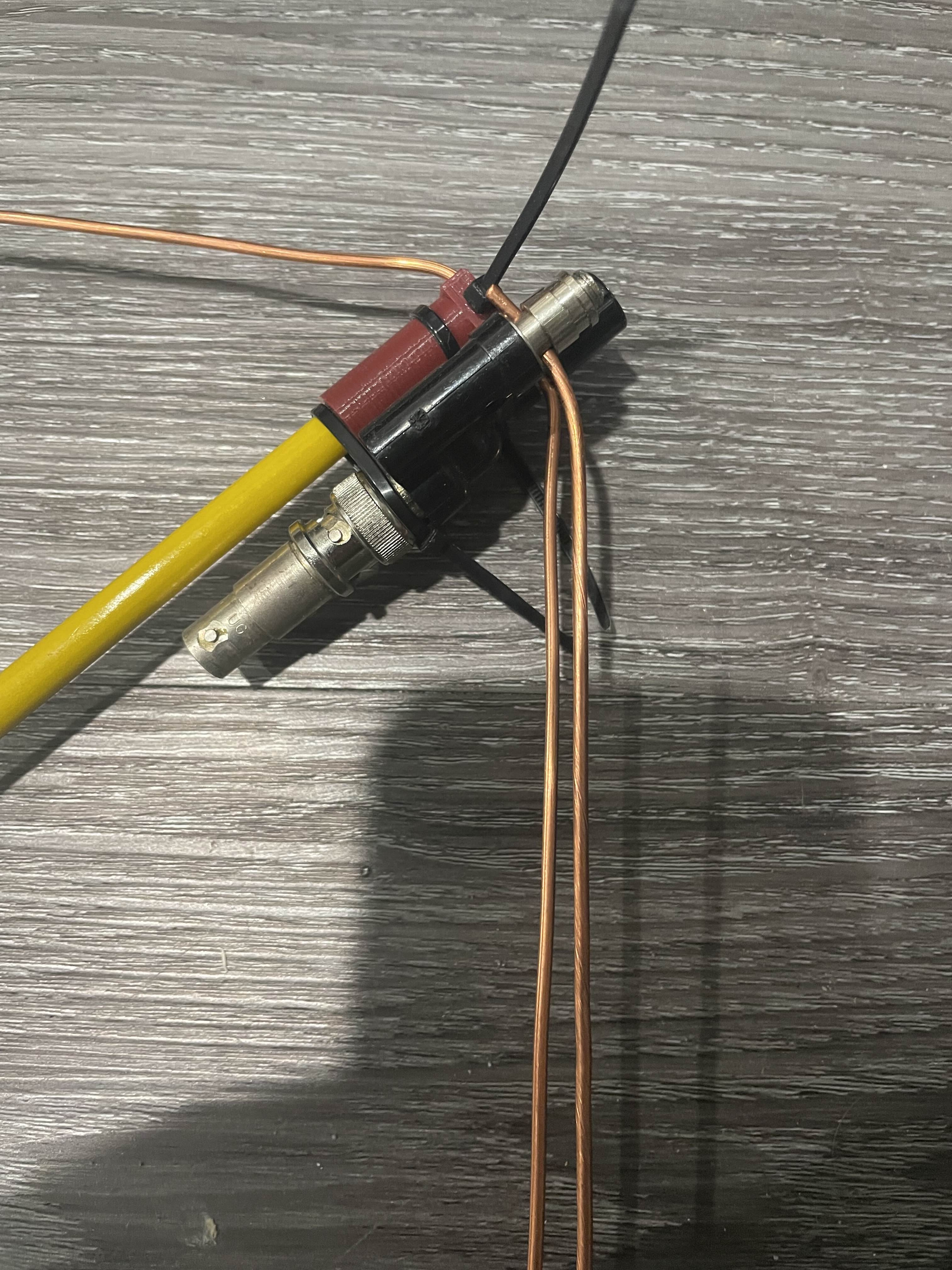
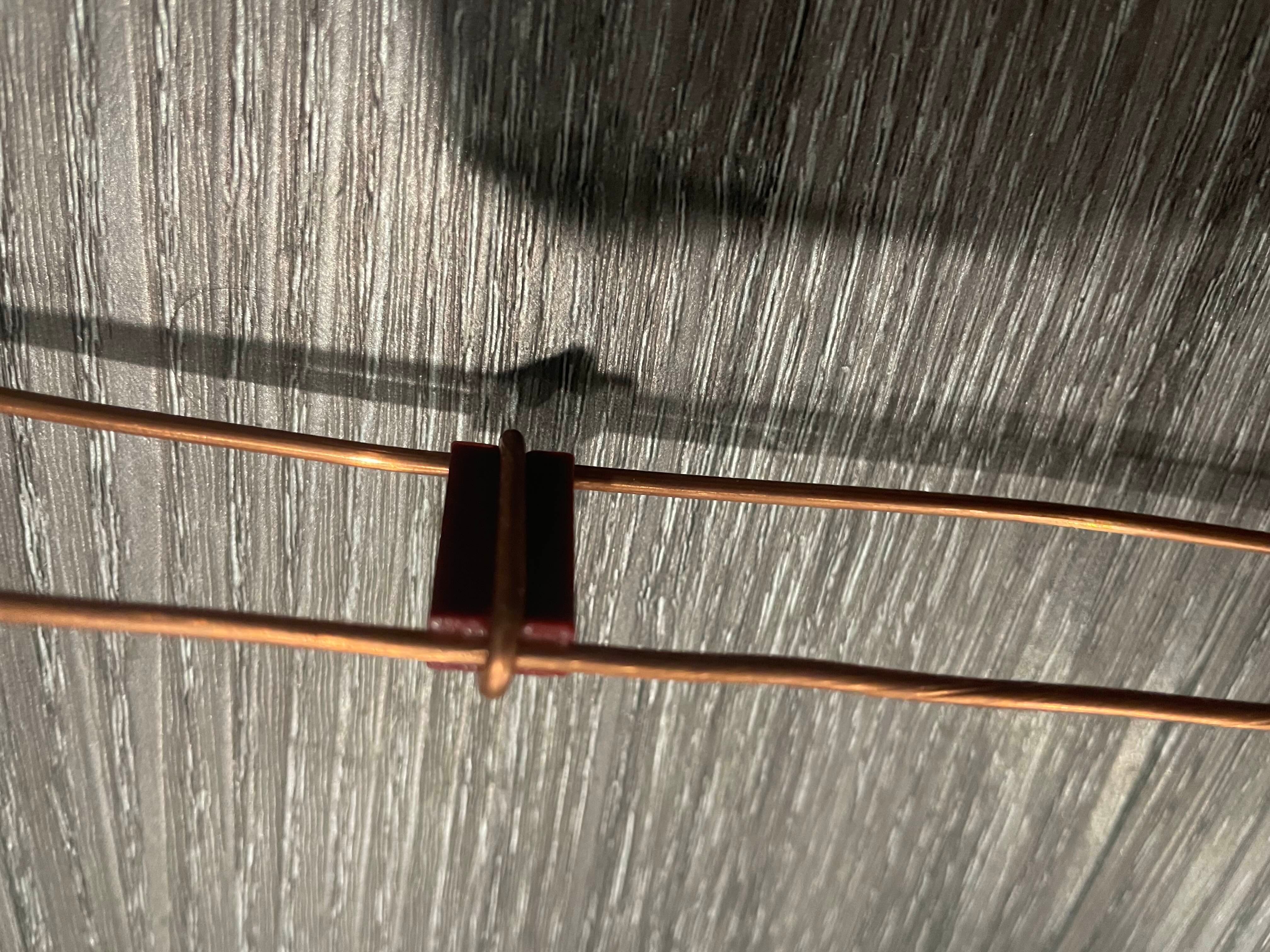
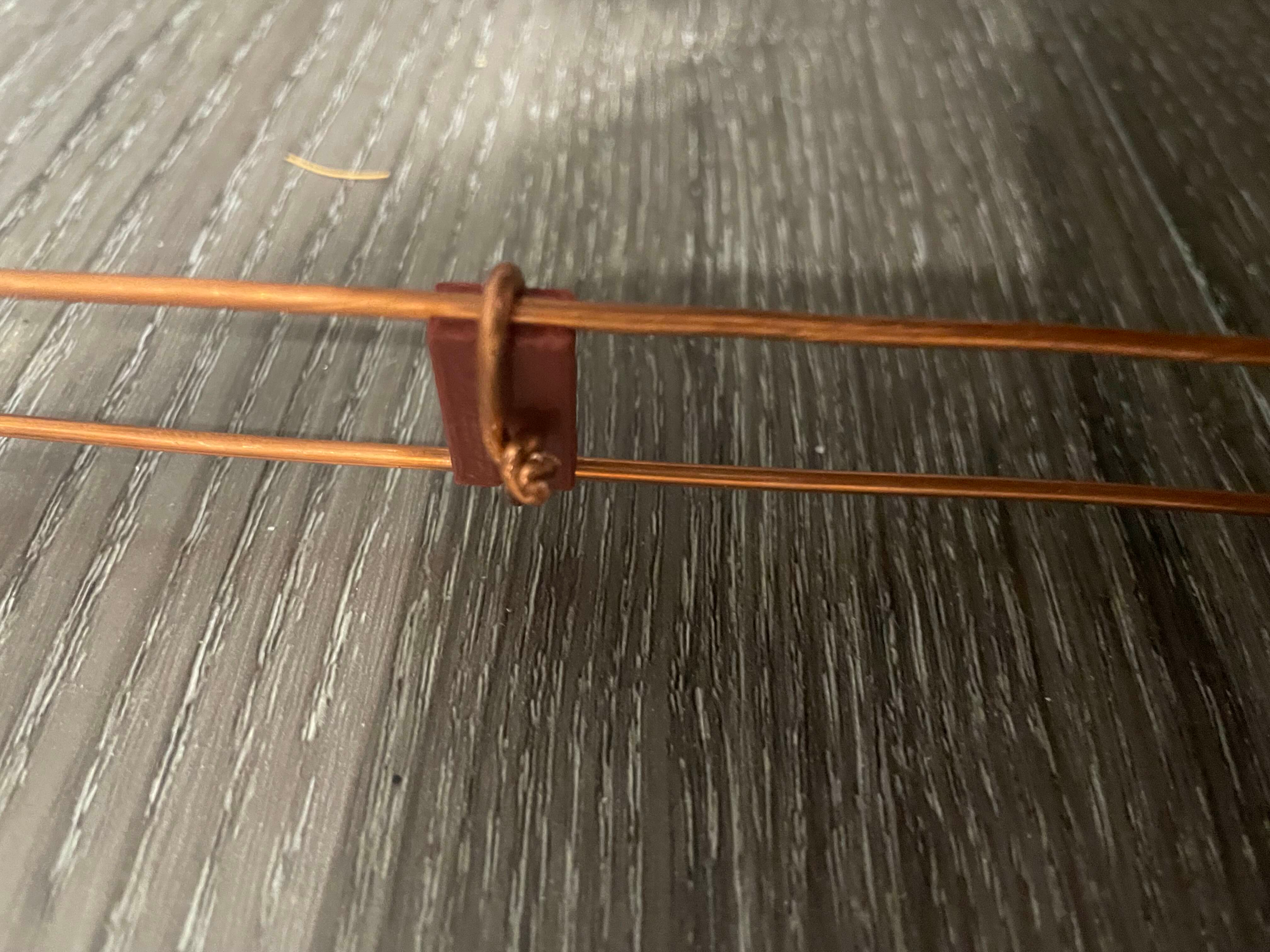
At the hardware store, I found some 4 foot fiberglass stakes with reflective tape at the top meant for marking the edges of driveways in snow. They are strong and lightweight so I connected two of them at right angles to support the antenna. I printed a plastic block designed to hold the stakes, with a tapered hole through the center to match the taper of my telescoping mast. The radiating element itself is about a halfwave of copper wire folded into a square crescent. I opted to feed it with a gamma match. I gave up on the mechanical challenge of building a series capacitor, and just opted to use the internal tuner in the rig to make up for the little bit of inductance. I made the gamma adjustable by making the shorting bar from a loop of wire tightened around a 3d printed spacer. I was in the mood to print things so I also designed caps for the ends of the stakes that accept zipties to hold the antenna wire in place. Adjusting the shorting bar took only a couple tries to get a resonant frequency and impedance I was satisfied with.
Lessons learned to improve in September
I failed to account for powering my laptop, so I made a small handful of contacts and then my laptop died. It would have been almost a 2 hour round trip plus charging time to go home and recharge it, and I was feeling as run down as the battery, so I called it for the day. If I had decided to operate as a rover, I could have made more contacts from home, especially during the Es opening that happened that evening, but I hadn’t operated as KL4LJ/R for those first few contacts so I couldn’t change.
-
Operate as a rover. There aren’t enough people operating up here (yet… ) to worry that operating as a rover at only a small number of sites will put me at the strategic disadvantage of not taking full advantage of the category I enter.
-
Plan for powering everything. Also see about a less power hungry laptop, or at least run a more lightweight DE than KDE Plasma (which otherwise I have been really liking).
-
Make it more clear to locals that I am also seeking FM contacts on 2m, 1.25m, and 70cm. I also had no way to ask the people I worked on 6m FT8 to QSY. I should look some more into that system that WSJT-X reportedly has for signaling band and mode changes for VHF contesting.
-
Related to the above, I didn’t have enough hands to keep the yagi consistently aimed at Fairbanks, and didn’t do much calling CQ on 2m FM. I have since found a tripod at a thrift store, which works nicely for holding up the yagi.